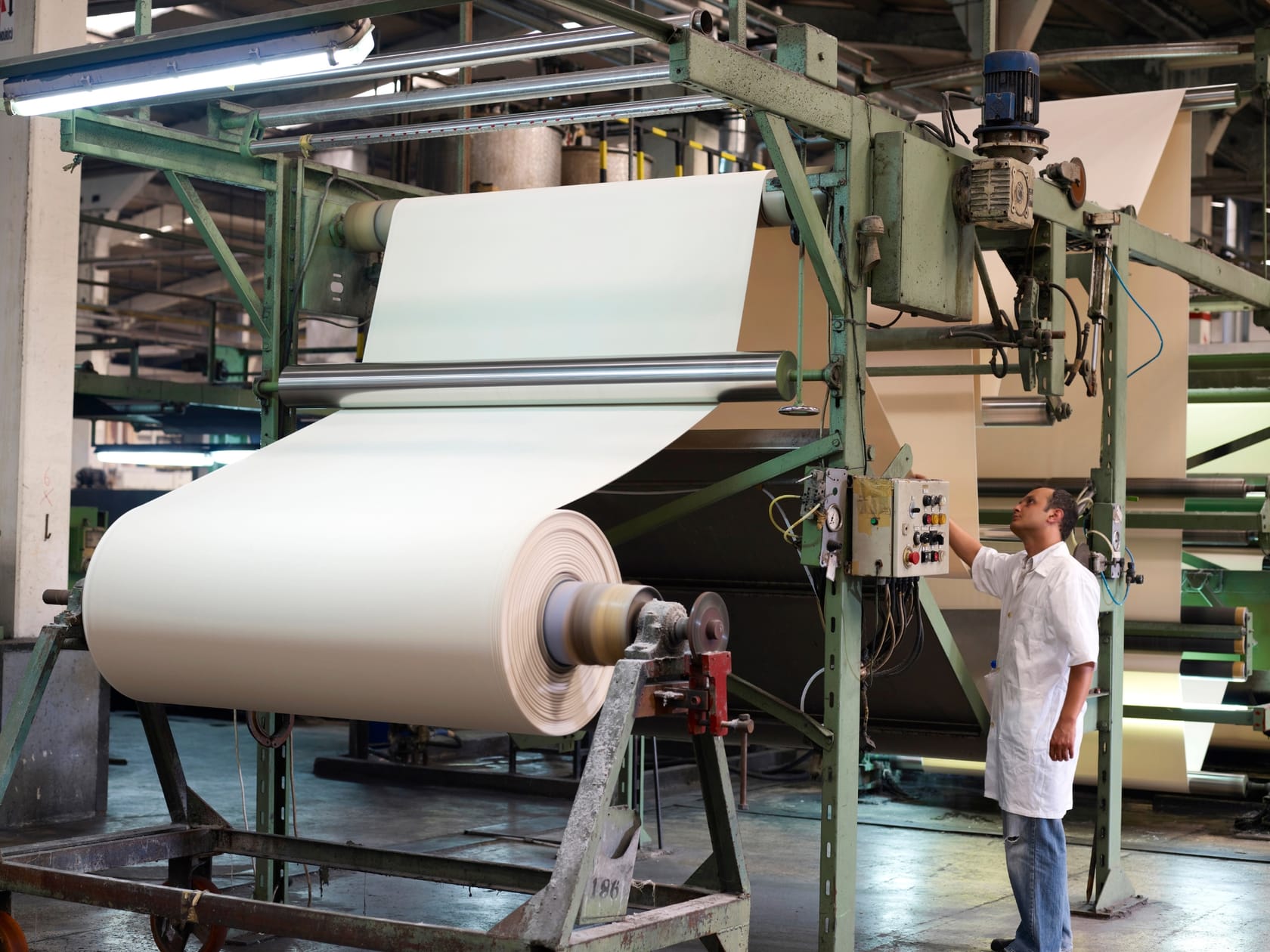
An operational diagnosis for the general, financial and operations management of Portuguese textiles — from the machine log to the traceability that European regulation is about to require.
Margin isn't lost at month-end close: it evaporates weeks earlier, on the shop floor and across distributed subcontracting. And European regulation is turning data traceability into a prerequisite for market access. This report combines the sector's real data (INE, ATP) with a method for reading the operation — no hype and no invented ROI promises; just the right questions to measure it.
Free · PDF · Data from official sources · No invented numbers.
Sector Report · 2026
Textiles 4.0
the operations playbook
INFOS·since 1990
The sector in numbers
Textiles in Portugal, in facts.
5.499 M€
Portuguese textile and apparel exports in 2025 (-0.8% vs 2024)
Source: INE (provisional), via ATP
~2/3
Of the sector's output is destined for export
Source: ATP
~20%
Of employment in Portuguese manufacturing industry
Source: ATP
~11%
Of Gross Value Added in manufacturing industry
Source: ATP
Where margin is lost
The sector's structural challenges.
01
The item-colour-size-batch combinatorics
A single style with 8 colours, 6 sizes and 4 batches generates 192 SKUs, all traced back to raw material. Generic ERPs break under this combinatorial explosion, pushing management into parallel spreadsheets and inventory that never reconciles. The cost is invisible tied-up capital and lost visibility over stock, reservations and commitments.
02
Distributed subcontracting and quality control
Coordinating orders across Portugal, Morocco, Turkey and Asia requires managing deadlines, logging defects with evidence and reconciling delivered quantities against invoiced ones. Without a structured channel, coordination lives in emails and phone calls, and quality is only discovered once the item has already arrived — the opposite of the transparency that international customers and regulation are starting to demand.
03
Real-time costing vs after-the-fact costing
Costing the item at month-end close hides the margin that has already evaporated. Only capturing times and defects on the shop floor, as production happens, feeds the real product cost. Without that continuous reading, you decide about the past instead of correcting the present.
04
Collection cycles and integrated PLM
From briefing to production — samples, tech packs, bill of materials and pricing — everything must live in the same system. When PLM is disconnected from the ERP, every collection pays the manual-reconciliation tax, time-to-market lengthens and you lose the structured database that the Digital Product Passport will consume.
What is changing
Regulatory pressure is already heading for your production
The Ecodesign for Sustainable Products Regulation (ESPR) came into force in July 2024. For textiles, the Digital Product Passport (DPP) will require traceability across the whole value chain — fibre composition, country of manufacture and chemical compliance — accessible via a data carrier such as a QR code or RFID. For management, this is neither an environmental nor a labelling topic: it is a data requirement. Production and origin data must exist, be linked to the item and be exportable at batch level. Those who don't capture it today won't have it when the delegated act starts to apply.
July 2024
ESPR enters into force (EU ecodesign framework).
2027 (expected)
Delegated act for the Digital Product Passport (DPP) for textiles.
From ~2028
Textile DPP application: value-chain traceability accessible via QR code / RFID.
The method
The INFOS method for reading the sector, in 4 steps
Before any technology, the diagnosis. These pillars organise the way INFOS reads a textile operation — from the machine log to the traceability that regulation will require — and help locate the data gaps before any purchasing decision. Use the questions as an honest self-assessment.
01
Shop-floor visibility
Output, times and defects only count if they are captured where they happen. Real-time OEE, mobile logging at the terminal and immediate reading of stoppages turn the shop floor from a black box into a source of decisions.
Do you know each section's OEE without waiting for month-end close?
Are times and defects logged at the machine or reconstructed afterwards by estimate?
How long passes between a line stoppage and your management hearing about it?
02
Batch-by-batch traceability
From raw material to shipment, each batch must be traceable in both directions. It is what underpins selective recalls, quality claims, international customer audits and — soon — the Digital Product Passport.
Can you trace a defect back to the raw-material batch and the responsible subcontractor?
Are fibre composition and country of manufacture linked to the item or held in separate files?
How long would it take you to answer a traceability request from an international customer?
03
Coordinating the subcontracting network
Distributed production requires a single channel where orders, deadlines, quality control and quantities live with an audit trail and multi-language support. Delivered-vs-invoiced reconciliation stops being a monthly hunt and becomes a system check.
Do subcontractors log progress and defects in a portal or send emails?
Can you reconcile delivered, accepted and invoiced quantity per order, with evidence?
When a deadline slips, do you find out in time to react or only at delivery?
04
Real-time costing and margin
The real cost of the item forms during production, not at close. Linking time capture to costing and cross-referencing margin by customer, collection and style lets you act while the margin can still be saved — managing margin instead of performing its autopsy.
Do you know the margin per style and collection during production or only after invoicing?
Is standard cost compared against the real cost captured on the shop floor?
Do you know which customers or collections are destroying margin this quarter?
“
The cost you learn on the 30th is already past correcting
Costing an item at month-end is performing the autopsy of a margin that has already died. The lost margin — in a batch with excess defects, in a subcontractor who delivered less than they invoiced, in a mispriced collection — was lost weeks ago and is unrecoverable. When times and defects are captured on the shop floor as they occur, the real cost forms in parallel with production and the deviation becomes actionable in the same week, not in the next set of accounts. And it is exactly this data infrastructure that the DPP will come to require: those who build it to manage margin are already, without knowing it, preparing for the compliance that lies ahead.
Excerpt from the report Textiles 4.0 · INFOS
Full report · PDF
What's in the full report.
Download the full report: sector data, the 4 challenges in depth, KPIs, architecture and the textile digital-maturity checklist.
The Portuguese textile sector in numbers: 2025 exports, destination markets and weight in industry (INE/ATP).
The 4 structural challenges in depth, from SKU combinatorics to integrated PLM, translated into margin, stock and cash.
The ESPR/DPP regulatory pressure translated into concrete production-data requirements — and what to prepare now.
The broader compliance framework: DPP, SAF-T (PT) and certified invoicing, GDPR and the AI Act.
What to measure: a set of operational and financial KPIs specific to textiles.
The recommended systems architecture, from PLM to shop floor and BI, mapped to the required capabilities.
Textile digital-maturity checklist: 8 to 12 actionable yes/no checks.
A phased evolution roadmap: from paper records to DPP-ready traceability.
Methodological note and cited sources (INE, ATP, European Commission).
Immediate access
Receive the report Textiles 4.0
Leave your name and email. Download it now and we'll also send you a copy of the link.
Frequently asked questions
Textiles, answered.
How much did Portuguese textile and apparel industry export in 2025?
According to INE (provisional data released in February 2026, via ATP), Portuguese textile and apparel exports reached €5,499 million in 2025, a fall of 0.8% versus 2024. Apparel accounted for €3,178.2 million, textile materials for €1,462 million and home textiles and other articles for €858.9 million.
What are the main destination markets for Portuguese textiles?
In 2025, the largest markets were Spain (€1,318 million), France (€834 million), Germany (€461 million), the United States (€420 million), the United Kingdom (€337 million) and Italy (€312 million). Concentration in European destinations reinforces direct exposure to EU regulation. Source: INE.
How important is the textile sector to the Portuguese economy?
According to ATP, the textile and apparel sector represents around 11% of Gross Value Added and around 20% of employment in national manufacturing industry. About two thirds of output is destined for export, making it one of the most internationalised industries in the Portuguese economy.
Why do generic ERPs fail in textile companies?
Because the item-colour-size-batch matrix explodes combinatorially: a style with 8 colours, 6 sizes and 4 batches is 192 SKUs, all to be traced back to raw material. Systems without a native colour-size-batch structure force parallel spreadsheets and compromise the reliability of stock, costing and the traceability that regulation will come to require. INFOS's ERP MULTI has this structure natively.
How do you measure OEE across multiple machines and shifts?
By capturing output, times and stoppages at the shop-floor terminal itself, instead of reconstructing them afterwards. With logging at the point of operation, OEE per section becomes available in real time, allowing action on stoppages and speed losses within the day, not at close. That is what KORA Productivity does on mobile terminals.
How do I control the quality of subcontractors outside Portugal?
With a subcontracting portal where orders, deadlines and quality control live in a single, multi-language channel with an audit trail. Defects are logged with evidence at the moment and delivered quantities are reconciled with invoiced ones, instead of scattered across emails. That is the role of INFOS's Subcontractors' Portal.
What is the Digital Product Passport (DPP) and when does it affect me?
It is the EU's traceability requirement for textiles — fibre composition, country of manufacture and chemical compliance — accessible via QR code or RFID, arising from the ESPR, in force since July 2024. For textiles, the delegated act is expected in 2027, with application from around 2028. As the obligation falls on the product placed on the single market, it also covers the SMEs that supply international brands. Source: European Commission.
What other compliance obligations should I anticipate?
Beyond ESPR/DPP, SAF-T (PT) and AT-certified invoicing apply, along with GDPR on personal data and, as regards artificial intelligence, the European AI Act. INFOS's Connect.AI offering, in partnership with LaTourrette.ai, is designed in compliance with the AI Act.
Where do I start if my digital maturity is still medium-to-low?
The sector's digital maturity is still considered medium-to-low, according to sector studies — the starting point for most companies is common. We recommend starting with data capture where value is created (output, times and defects on the shop floor and batch-by-batch traceability) and using the report's maturity checklist and four-step method to locate the gaps before any technology decision.
Want to read your operation with this method?
Discover the INFOS solutions for textiles — or talk to our team.