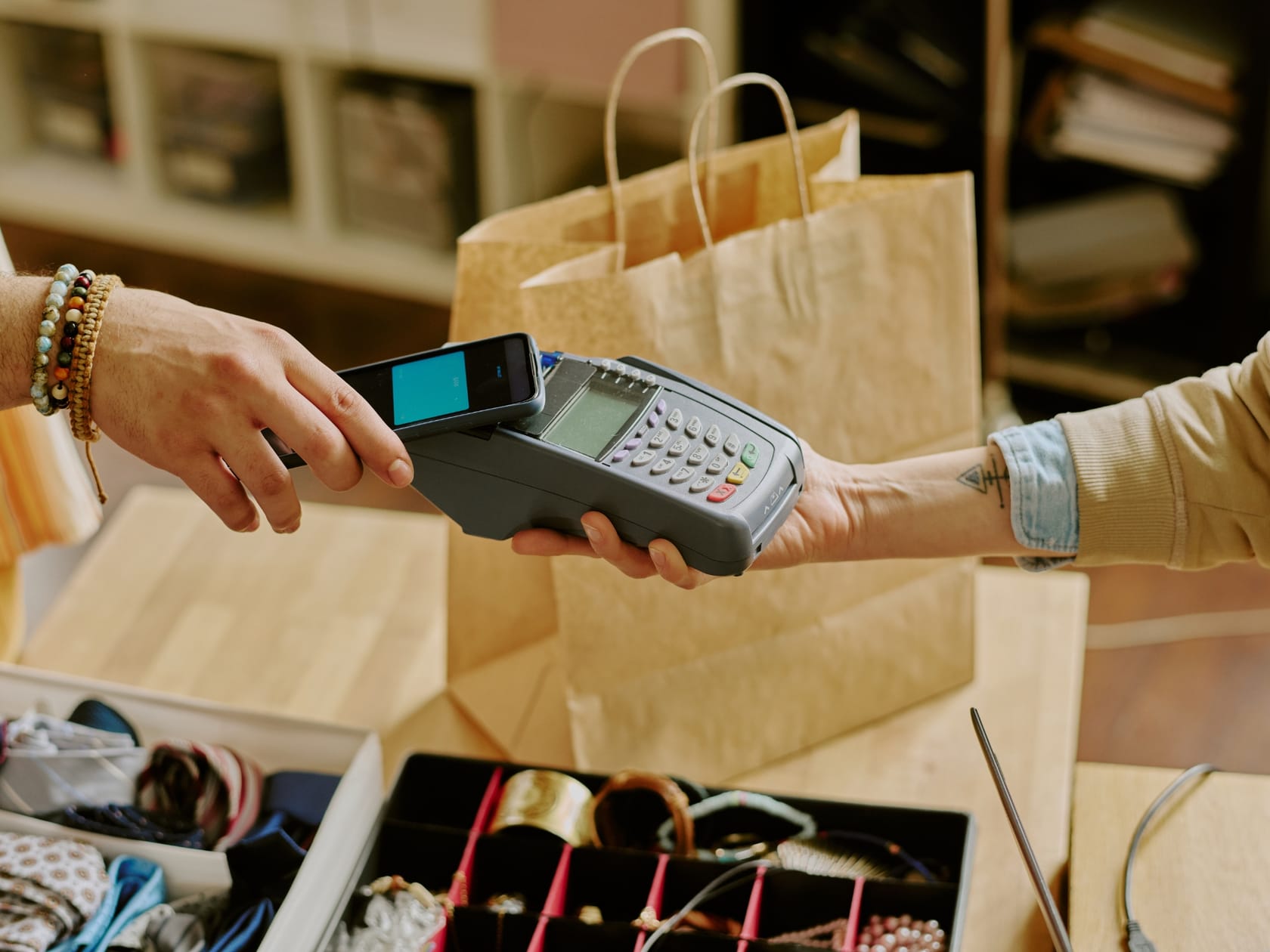
The operational playbook for stores, chains and franchises that demand a consistent experience across every channel — with no stock lies between updates.
Retail trade in Portugal grew, but complexity grew faster: the customer moves across the physical store, online and marketplaces within the same buying decision, while the operation tries to serve them from systems that only talk to each other once an hour. This report separates what looks omnichannel from what is omnichannel — and shows the architecture that sustains margin, zero stockouts and governance between head office and store.
Free · PDF · Data from official sources · No invented numbers.
Sector Report · 2026
Retail
omnichannel, one single truth
INFOS·since 1990
The sector in numbers
Retail in Portugal, in facts.
+4,7%
Growth in retail trade turnover in 2024
Source: INE, 2024
59,3%
Population aged 16-74 who bought online in the previous 12 months
Source: INE, 2024
201,8 mil M€
Trade turnover in 2024 (+3.6% versus 2023)
Source: INE, 2024
19,5%
Share of orders via electronic networks in turnover (companies with 10+ staff)
Source: INE, 2023
Where margin is lost
The sector's structural challenges.
01
Shared stock vs synchronised stock
The difference is structural, not technical. Shared stock means a single system that feeds store, online and marketplaces in real time. Synchronised stock means two or more systems that update periodically — and between each update lives a 'lie' window: you sell online what has already left the shelf, or you block in-store what actually exists. The higher the traffic, the more expensive that window.
02
Genuinely resilient POS — offline-first, not 'fault-tolerant'
Tolerating faults is continuing to sell when the network drops and losing the sales when it returns. Offline-first is selling without a network, storing locally and reconciling automatically when the connection returns — no duplication, no lost receipts. On peak days like Black Friday, it is the difference between taking the sale and improvising.
03
Governance between head office and store (and franchise)
Catalogue, base pricing and global promotions belong to the centre; outlet prices, local campaigns and stock management belong to the store. Without a clear boundary of who decides what, every store becomes an exception — and the brand stops being consistent. In franchise models, the boundary is also contractual.
04
Margin per store and per channel — not per company
Consolidated margin hides everything that matters. Some stores look profitable and burn margin on local discounts; some online channels grow in revenue and shrink in contribution after returns and fulfilment cost. Without margin per store and per channel, promotion and assortment decisions are made in the dark.
What is changing
Market pressure and compliance framework
Portuguese retail faces two forces at once. The first is competitive: the customer already buys online routinely — almost half the population bought online in the last three months — and expects the physical store to know their basket, their history and the real stock. The second is compliance: invoicing must be AT-certified and exportable in SAF-T (PT), customer data processing follows GDPR, and any use of AI (recommendation, forecasting, dynamic pricing) falls within the scope of the AI Act. These aren't boxes to tick once — they are continuous requirements the architecture must sustain by design.
Current
AT-certified invoicing and SAF-T (PT) export mandatory across the whole sales operation.
Current
GDPR applicable to customer profiles, loyalty programmes and omnichannel communication.
2024
59.3% of the population (aged 16-74) already bought online in the previous 12 months — omnichannel expectation entrenched (INE).
In phased force
The AI Act frames recommendation, demand forecasting and algorithmic pricing used in retail.
The method
The four pillars of genuinely omnichannel retail
Omnichannel isn't having a store and a site. It's ensuring that stock, price, customer and margin are the same truth at any point of contact. Assess your operation against these four pillars before investing in more channels.
01
A single truth of stock
A single availability repository that serves all channels in real time, with reservation, allocation and store-to-store visibility. The goal is to eliminate the lie window between systems.
Do online and store see the same quantity at the same instant, or is there a synchronisation lag?
Can you fulfil an online order from any store's stock (ship-from-store)?
How many stockouts and oversells result from update windows between systems?
02
A resilient point of sale
An offline-first POS that keeps sales, receipts and payment methods running without a network and reconciles without intervention when the connection returns. Resilience is measured on peak days, not on normal ones.
If the internet drops at 6pm on Black Friday, does the store keep selling and issuing a certified receipt?
Is post-failure reconciliation automatic or does it require manual close and correction?
Do payment methods and loyalty work in a degraded, offline mode?
03
Central-local governance
An explicit boundary between what head office controls (catalogue, base pricing, global promotions) and what the store or franchisee decides (outlet, local campaigns, stock). Every decision has an unambiguous owner.
Who can change a price in a store, and does that change respect the limits set by head office?
Do global promotions propagate to all stores without store-by-store manual work?
In a franchise model, is the decision boundary aligned with the contract?
04
Margin visible per store and per channel
Real contribution measured at the store and channel level, net of discounts, returns and fulfilment cost — with peer comparison to distinguish the problem from the context.
Do you know the real margin of each store and each channel this month, without waiting for close?
Can you compare like-for-like stores to separate poor management from a poor market context?
Are per-channel promotions decided based on contribution or on revenue?
“
The lie window has a price — and it grows with traffic
Whenever two systems synchronise once an hour, there are 60 minutes in which what online shows and what the store has stop matching. On normal days this translates into a few manual corrections. On peak days — when traffic multiplies and bestseller stock sells out in minutes — that window turns into overselling (orders that can't be fulfilled, with the associated reputational cost) and underselling (available product the channel refuses to sell). The solution isn't to synchronise faster: it's to stop having two systems. Shared stock — a single repository serving all channels — eliminates the window by design, instead of narrowing it.
Excerpt from the report Retail · INFOS
Full report · PDF
What's in the full report.
Get the full Retail report — with the omnichannel-maturity checklist and the reference architecture — and diagnose your operation.
Retail trade in numbers: growth, the weight of online and the Portuguese customer's expectations (INE data).
Shared vs synchronised stock explained in detail — and how to calculate the cost of the lie window.
Why 'fault-tolerant' isn't enough: the design of a genuinely offline-first POS.
A central-local governance model ready to adapt to owned stores and franchise.
The KPIs that separate profitable retail from busy retail — per store and per channel.
The reference architecture mapped to concrete systems, without over-selling.
An omnichannel-maturity checklist to use at your next management meeting.
Compliance in practice: SAF-T, AT-certified invoicing, GDPR and the AI Act in retail.
How to instrument per-channel promotions without destroying consolidated margin.
Immediate access
Receive the report Retail
Leave your name and email. Download it now and we'll also send you a copy of the link.
Frequently asked questions
Retail, answered.
What is the difference between shared stock and synchronised stock?
Shared stock is a single system that feeds all channels in real time — there is always one single truth of availability. Synchronised stock is two or more systems that update periodically; between updates there is a window in which the numbers diverge, generating overselling and apparent stockouts. For omnichannel retail with significant traffic, shared stock is the only approach that scales without error.
What does it mean for a POS to be 'offline-first' rather than just 'fault-tolerant'?
Fault-tolerant means the system withstands a network outage but may lose sales or require manual correction afterwards. Offline-first means the store was designed to sell without a network: it records the sale and receipt locally and reconciles automatically, with no duplication or loss, when the connection returns. It is the critical difference on peak days like Black Friday.
How do you manage the boundary between head office and store in a franchise model?
You define explicit governance: head office controls catalogue, base pricing and global promotions; the store or franchisee controls outlet prices, local campaigns and stock management. Each type of decision has an owner and limits. In franchising, that boundary should reflect the contract, and the system should technically prevent changes outside the permitted scope.
Why is it insufficient to look at the company's consolidated margin?
Consolidated margin aggregates profitable stores with stores that burn discounts and online channels that grow in revenue but shrink in contribution after returns and fulfilment cost. Without margin at the store and channel level, promotion and assortment decisions are made without visibility of what really contributes — and problems only appear at close.
What compliance obligations apply to retail in Portugal?
Invoicing must be AT-certified and exportable in SAF-T (PT). Customer data processing — loyalty programmes, profiles, communication — follows GDPR. And any use of AI, such as recommendation, demand forecasting or algorithmic pricing, falls within the scope of the AI Act. These are continuous requirements the architecture must sustain by design.
How much does online commerce weigh in Portuguese retail today?
According to INE, in 2024 48.9% of the resident population aged 16 to 74 bought online in the previous three months (+5 p.p.) and 59.3% in the previous twelve months. On the side of companies with 10 or more employees, in 2023 orders via electronic networks represented 19.5% of turnover. Online is no longer an accessory channel.
How do you instrument per-channel promotions without destroying margin?
First, measure per-channel contribution net of discounts, returns and fulfilment — not just revenue. Then, assign each promotion decision to an owner within the central-local governance. Finally, compare with like-for-like stores and periods to distinguish a genuine promotional effect from a mere pull-forward of a sale that would have happened anyway.
Where do you start to modernise a retail operation?
With the diagnosis against the four pillars: a single truth of stock, a resilient POS, central-local governance and margin visible per store and channel. Most operations have one strong pillar and three weak ones. Identifying the bottleneck avoids investing in more channels on a base that still lies about stock.
Want to read your operation with this method?
Discover the INFOS solutions for retail — or talk to our team.