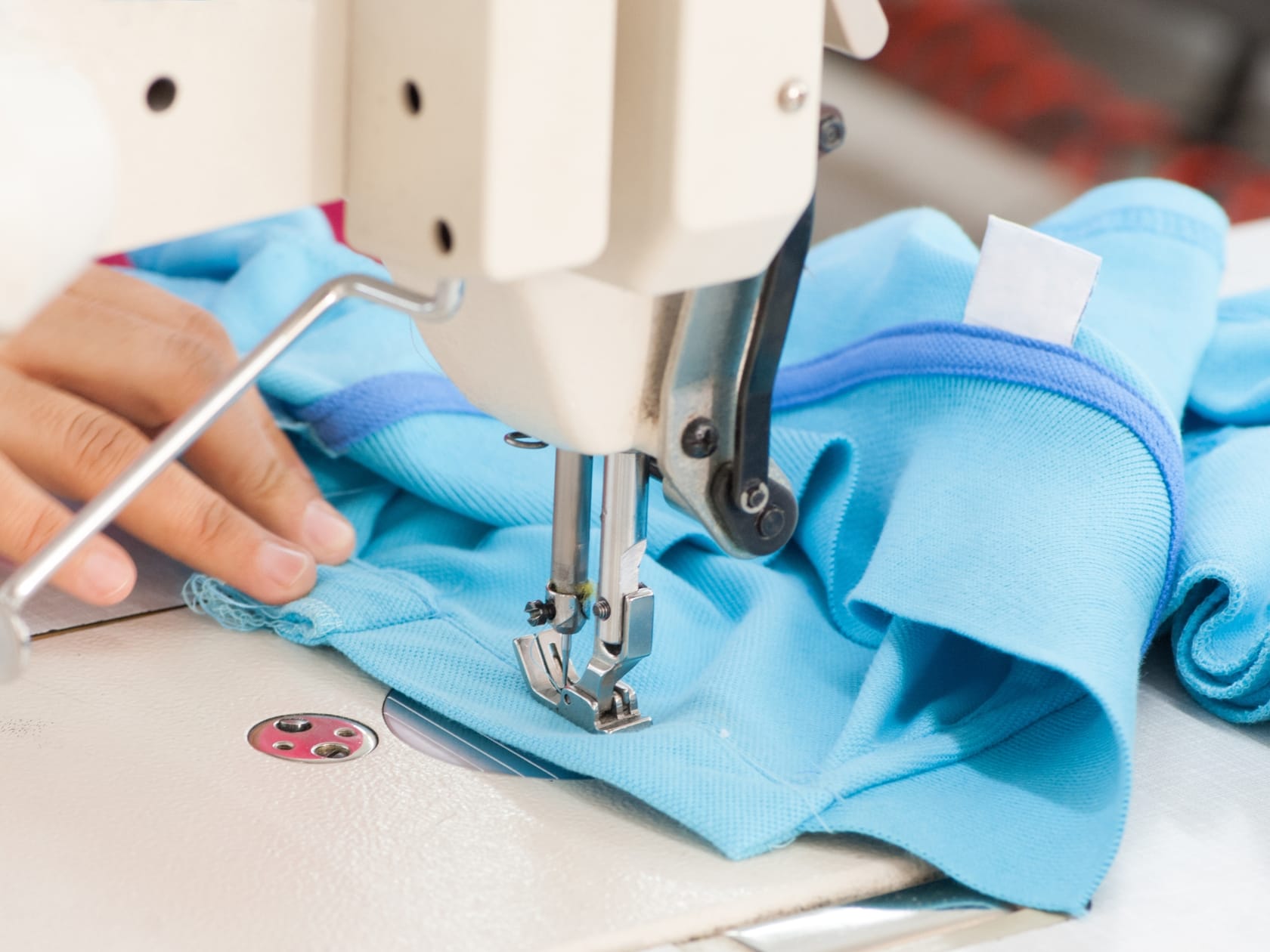
An operational diagnosis for the general, financial and operations management of apparel brands and manufacturers in Portugal.
Portuguese apparel lives on short cycles, seasonal peaks and customers who expect to see the right stock in any channel. Anyone still managing collections in spreadsheets and measuring margin by category is flying blind. This report combines official data with an actionable method to align PLM, ERP and omnichannel retail.
Free · PDF · Data from official sources · No invented numbers.
Sector Report · 2026
Apparel
from collection to store, without silos
INFOS·since 1990
The sector in numbers
Apparel in Portugal, in facts.
3.178,2 M€
Apparel exports in 2025 (-0.3%), part of a textile and apparel industry worth €5,499M
Source: INE (provisional, Feb 2026), via ATP
~20%
Textile and apparel share of manufacturing employment; ~11% of GVA; ~2/3 of output exported
Source: ATP
59,3%
Resident population (16-74) who bought online in the previous 12 months (2024)
Source: INE
2027/2028
Digital Product Passport for textiles: delegated act expected 2027, application ~2028
Source: European Commission
Where margin is lost
The sector's structural challenges.
01
Omnichannel stock the customer sees in real time
Click-and-collect fails when the store has already sold the last item the site showed as available. Without a single view of inventory across the physical store, BackStore and online store, each channel lies about the others — and the promise to the customer breaks at the moment of truth.
02
Collections with compact cycles
From briefing to store in 6-12 weeks, with tech packs, BOM and pricing circulating between design, purchasing and production. When this information lives in emails and scattered sheets, traceability is lost, sample errors repeat and the collection's arrival is delayed.
03
Margin per style, not per category
The 'knitwear' category can hide a champion style and three that destroy margin. Without analysing profitability by style, colour, size and channel, replenishment and discount decisions rest on averages that hide the real winners and losers.
04
Seasonal peaks that multiply volume
Black Friday can triple transaction volume in a single day. Systems that cope day-to-day collapse at peak — POS that must be offline-first, stock synchronisation that can't queue, and store teams that can't wait for the system.
What is changing
Digital Product Passport: traceability becomes mandatory
The Ecodesign for Sustainable Products Regulation (ESPR) has been in force since July 2024 and paves the way for the Digital Product Passport (DPP) applied to textiles and apparel. In practice, each item will have to carry verifiable information — fibre composition, country of manufacture — accessible via QR code or RFID. For those who produce or import, this means structuring product and supplier data now, not in 2028. Alongside this, the national and European compliance obligations that already shape the back office remain.
Jul 2024
ESPR in force — framework for ecodesign and product-information requirements (European Commission).
2027 (expected)
Delegated act defining the DPP requirements for textiles and apparel.
~2028
DPP application: QR code/RFID traceability with fibre composition and country of manufacture.
Ongoing
SAF-T (PT) and AT-certified invoicing, GDPR and the AI Act frame data processing and automation.
The method
The INFOS method for apparel: four pillars
A diagnosis is only worth what it changes in the operation. We have structured the transformation into four pillars — each with questions that management should be able to answer with data, not with intuition.
01
Integrated collection (PLM)
Bring briefing, tech packs, BOM, samples and pricing into a single flow, linked to purchasing and production. The collection stops living in spreadsheets and becomes a traceable process, with clear versions and owners.
How long does it take today, on average, from briefing to arrival in store?
Can you reconstruct the tech pack and BOM of any style from the previous collection?
Who approves sample changes and where is that recorded?
02
Single, omnichannel inventory
A single truth of stock across store, warehouse and online, with mobile reading and batch-by-batch traceability. The customer sees real availability; click-and-collect delivers; and replenishment between channels stops being guesswork.
Is the stock the site shows the same the store sees this second?
How long does it take you to locate a specific batch in the warehouse?
Does the POS keep selling if the internet drops during a peak?
03
Margin per style and per channel
Analyse profitability at the level of style, colour, size, customer, collection and channel — on dedicated BI. Replenishment, markdown and end-of-life decisions come to rest on real stock rotation and margin.
Do you know which five styles destroy the most margin in this collection?
Is your markdown decided by rotation data or by calendar?
Can you compare the margin of the same style between physical store and online?
04
DPP-ready data
Structure now the composition, origin and supplier information the Digital Product Passport will require. What looks like a regulatory burden becomes an asset: traceability that also serves quality, returns and customer trust.
Do you have fibre composition and country of manufacture structured per reference?
Do your subcontractors log quality and origin in an auditable way?
Could you generate a per-item identifier (QR/RFID) without rewriting the ERP?
“
The category that looks healthy and the truth of the style
A category with an 'acceptable' average margin tends to hide an extreme distribution: a few styles pull all the profitability while others are systematically sold at markdown. When the analysis drills down to the style — and to the colour/size/channel cross-reference — management realises the problem isn't the collection, it's the mix. Repositioning replenishment and markdown at the style level, based on real rotation, usually frees up margin without cutting a single winning reference.
Excerpt from the report Apparel · INFOS
Full report · PDF
What's in the full report.
Get the full report and find out where your apparel operation loses margin — and how to recover it.
The sector in numbers: exports, weight in industry and online buying behaviour, with official sources.
The four structural apparel challenges, examined in depth with concrete operational symptoms.
Digital Product Passport timeline and what to structure before 2028.
The KPIs that separate brands that decide with data from those that decide on intuition.
Recommended architecture: how PLM, ERP, omnichannel retail and BI fit together.
Digital-maturity checklist for apparel (yes/no, 10 points).
A sample insight on margin per style that tends to surprise management.
A (non-commercial) mapping of the INFOS stack to the sector's real problems.
Methodological note and sources for independent verification.
Immediate access
Receive the report Apparel
Leave your name and email. Download it now and we'll also send you a copy of the link.
Frequently asked questions
Apparel, answered.
How much are Portugal's apparel exports worth?
In 2025, apparel exports reached €3,178.2 million (-0.3% versus 2024), within a Textile and Apparel Industry totalling €5,499 million (-0.8%). Source: INE (provisional data, Feb 2026), via ATP.
How important is the textile and apparel industry to the Portuguese economy?
According to ATP, the textile and apparel industry represents around 11% of GVA and around 20% of employment in manufacturing industry, with roughly two thirds of output destined for export.
What is the Digital Product Passport (DPP) and when does it come into force for apparel?
The DPP is a digital identifier (accessible via QR code or RFID) that gathers verifiable information about each item, such as fibre composition and country of manufacture. It arises from the ESPR, in force since July 2024. For textiles and apparel, the delegated act is expected in 2027, with application foreseen around 2028. Source: European Commission.
What legal compliance does the back office of an apparel brand in Portugal need?
The obligations include SAF-T (PT) and AT-certified invoicing, GDPR in the processing of personal data, and the AI Act when artificial-intelligence solutions apply. INFOS's ERP MULTI covers SAF-T and certified invoicing natively.
Why is it important to measure margin per style instead of per category?
Category-level analysis computes averages that hide dispersion: highly profitable styles and styles sold at markdown cancel out in the aggregate. Measuring margin per style, colour, size and channel reveals where the profit really is and where there is erosion, allowing replenishment and markdown to be decided with precision.
How do you ensure online and store stock are synchronised?
You need a single source of inventory truth, shared across store, warehouse and online channel, with mobile reading and batch-level traceability. This way the site shows real availability and click-and-collect stops failing because the item has already been sold in store.
Do the systems cope with peaks like Black Friday?
It depends on the architecture. Seasonal peaks that multiply volume require an offline-first POS (that keeps selling if the connection drops) and resilient stock synchronisation. An omnichannel retail solution built for the peak is different from one that only serves day-to-day.
Does INFOS know the apparel sector?
INFOS — Informática e Serviços, S.A. has operated in Portugal since 1990, with verticalised management software and a strong presence in industry. Its apparel stack includes ERP MULTI, Connect@Fashion (PLM), MAXIRETAIL (omnichannel), KORA Inventory and MyBusiness-ITV for margin analysis by style and channel.
Want to read your operation with this method?
Discover the INFOS solutions for apparel — or talk to our team.